Editor’s Note
At PHAIDEA, we view industrial robotics not as a niche technology, but as one of the foundational infrastructures of the next industrial era.
Across developed economies, labor shortages, aging populations, supply chain vulnerabilities, and rising geopolitical tensions are forcing governments and industries to rethink how goods are produced and moved. Industrial robotics sits at the center of this transformation.
From automated factories and logistics hubs to smart agriculture and advanced manufacturing, robotics is becoming a strategic asset for nations, investors, and corporations. Understanding industrial robotics is no longer about understanding machines, it is about understanding the future of productivity, resilience, and economic competitiveness.
Value of Industrial Robots
Industrial robotics is becoming one of the most important technologies shaping the global economy.
Many developed nations face a common challenge: shrinking workforces. Japan, South Korea, Germany, and increasingly China are experiencing demographic decline while demand for manufacturing, logistics, and food production continues to grow. At the same time, companies face pressure to reduce emissions, improve efficiency, and strengthen supply chain resilience.
Industrial robotics offers a practical solution to these challenges.
Modern robotics systems are no longer limited to automotive assembly lines. They now operate across warehouses, semiconductor fabs, agriculture, food processing, pharmaceuticals, and advanced manufacturing facilities. Combined with AI, computer vision, and autonomous mobility, robots are becoming capable of handling increasingly complex tasks with greater precision and lower operating costs.
Governments around the world recognize this strategic importance. Japan continues to support robotics adoption through its Society 5.0 initiatives and manufacturing modernization programs. China has invested heavily through its Made in China strategy, aiming to become a global leader in robotics and intelligent manufacturing. The United States promotes domestic manufacturing through industrial policy, while the European Union supports automation as part of its competitiveness and sustainability agenda.
For investors, industrial robotics represents a long-term productivity theme. Capital is flowing into industrial automation software, warehouse robotics, collaborative robots (cobots), autonomous logistics systems, AI-powered quality inspection, and semiconductor manufacturing equipment.
Leading companies such as Fanuc, ABB, Yaskawa Electric, KUKA, and emerging firms developing autonomous warehouse and agricultural solutions are attracting significant corporate and venture investment.
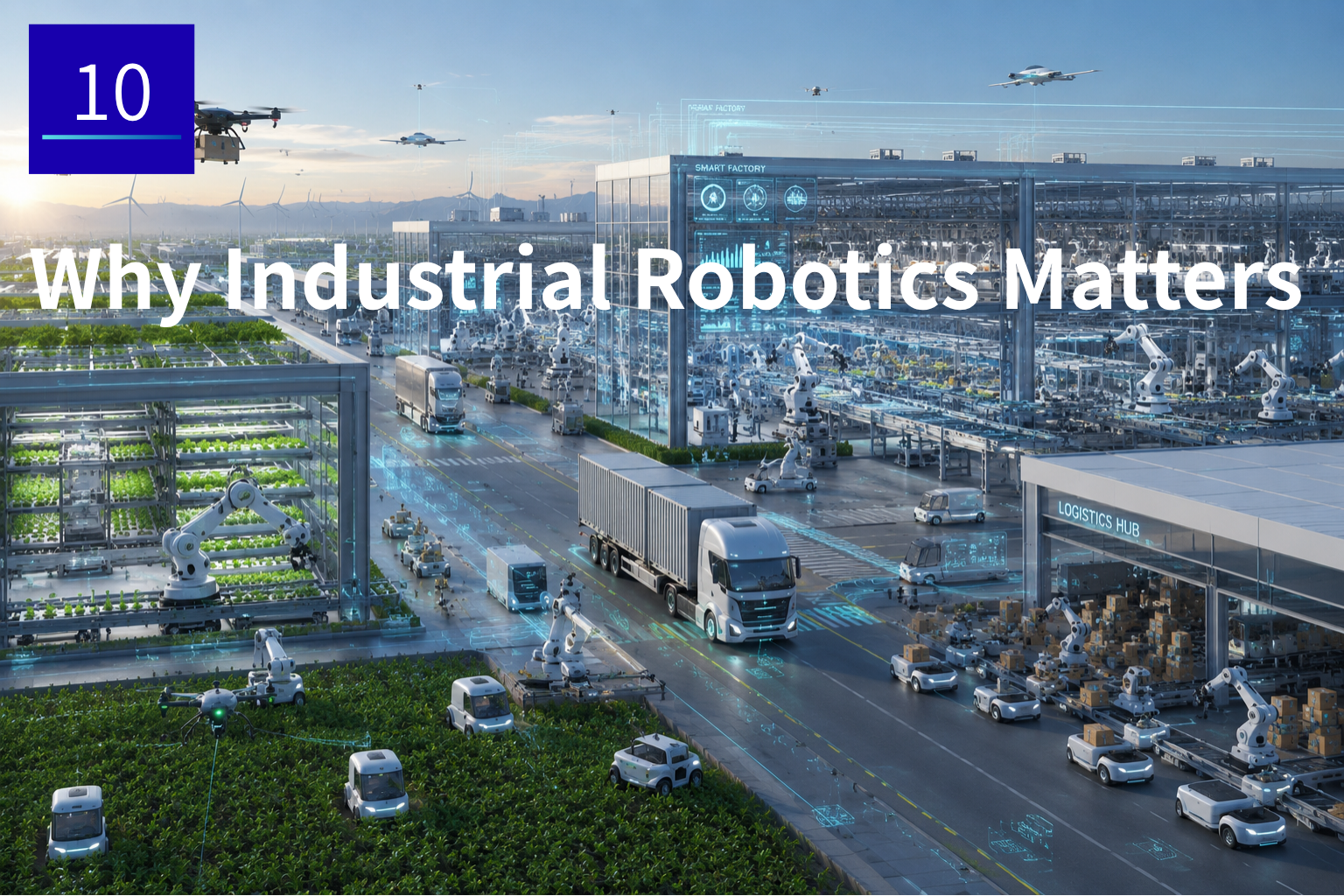
The next phase of industrial robotics will extend beyond factory automation. Smart factories, autonomous logistics networks, precision agriculture, and AI-driven manufacturing ecosystems are beginning to merge into interconnected production systems.
Industrial robotics is no longer simply about reducing labor costs. It is becoming a critical pillar of economic security, industrial competitiveness, and sustainable growth. Nations that successfully deploy robotics at scale may gain a decisive advantage in the industries that define the coming decades.
– PHAIDEA Editor’s team