Editor’s note
At PHAIDEA, we view defense technology not simply as military capability, but as a foundational layer of national resilience and technological innovation.
Throughout history, many transformative technologies—from the internet and GPS to satellite communications—originated from defense-driven research. Today, artificial intelligence, autonomous systems, semiconductors, cyber security, and space technologies are once again reshaping how nations protect their interests and strengthen industrial competitiveness.
Understanding defense technology is no longer limited to understanding warfare.
It is about understanding the future of innovation itself.
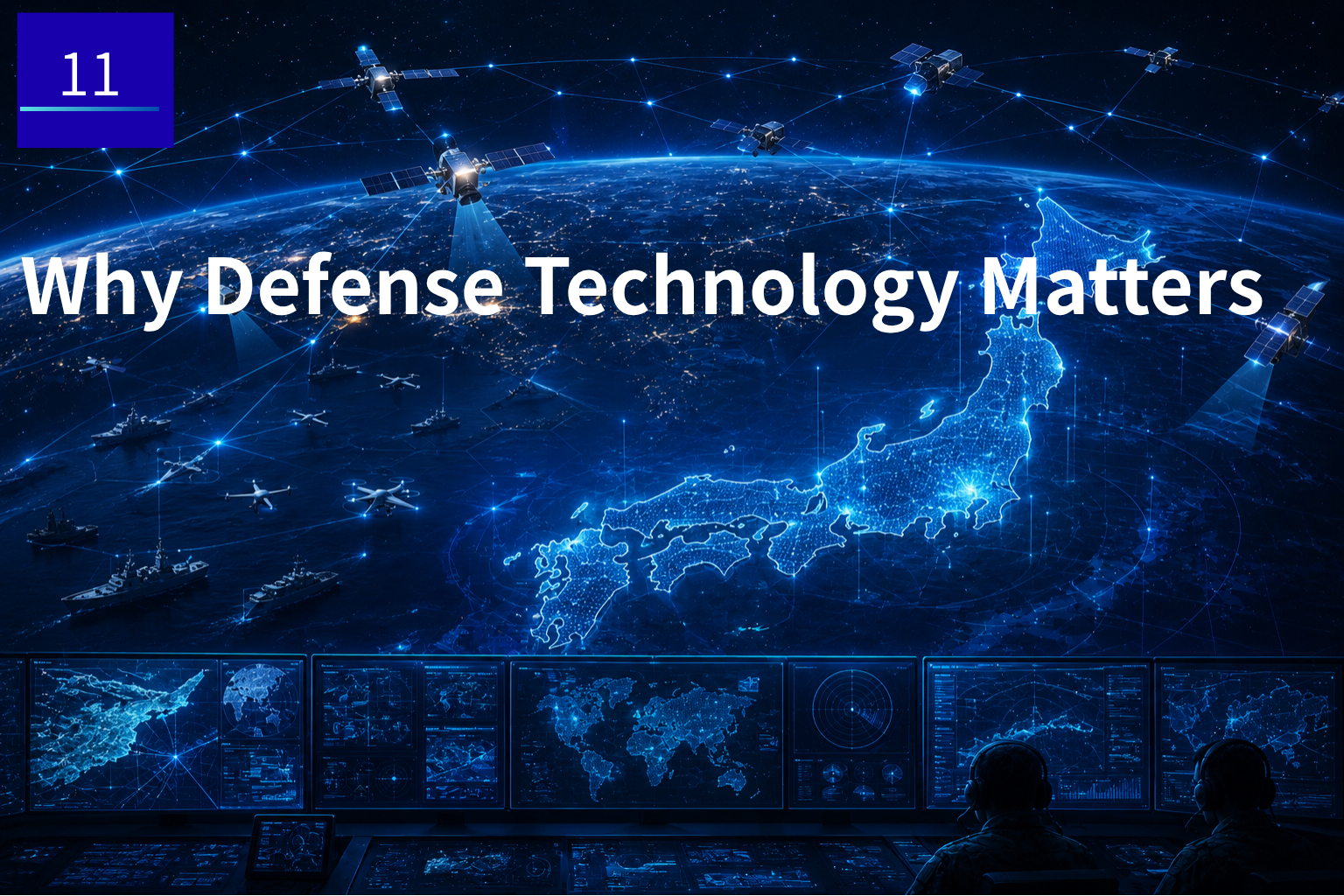
Why Defense Technology
Defense technology has entered a new era. Modern competition between nations is increasingly defined not only by military strength, but by technological superiority, industrial capacity, and the ability to innovate faster than rivals.
Artificial intelligence, autonomous drones, humanoid systems, satellite networks, quantum technologies, cyber security, and advanced semiconductors are becoming strategic assets. As geopolitical uncertainty grows, governments are investing heavily in these capabilities not only to enhance national defense, but also to strengthen economic resilience and technological leadership.
From an analyst’s perspective, defense is no longer an isolated sector. It has become one of the strongest demand drivers for advanced manufacturing, AI infrastructure, robotics, aerospace, communications, and semiconductor industries. Many technologies developed for defense eventually find commercial applications, creating entirely new markets. The relationship between government procurement, industrial investment, and private capital has therefore become increasingly interconnected.
Academic researchers observe another important trend. Defense research has historically accelerated scientific progress by funding long-term, high-risk research that private markets alone often cannot support. Today, research in autonomous systems, human-machine collaboration, secure AI, advanced materials, and space engineering continues to expand the technological frontier. The challenge for academia is to balance scientific openness with national security and ethical responsibility.
This transformation also requires new governance. As autonomous systems become more capable, societies must establish clear standards regarding accountability, safety, cybersecurity, international law, and human oversight. Future defense innovation will depend not only on technological breakthroughs, but also on trusted regulatory frameworks that enable responsible deployment.
Around the world, governments are adapting in different ways. The United States continues to leverage its defense innovation ecosystem through close collaboration between government, startups, venture capital, and major technology companies. Europe is strengthening strategic autonomy through joint industrial initiatives. Japan is expanding defense investment while reinforcing economic security and domestic industrial capabilities. Across Asia and beyond, defense technology is increasingly viewed as both a security priority and an industrial growth engine.
Defense technology is not solely about preparing for conflict.
It is about building resilient societies, protecting critical infrastructure, and accelerating technological progress.
At PHAIDEA, we follow defense technology because it represents one of the clearest intersections of capital, policy, industry, and innovation.
The technologies that safeguard nations today may become the industries that shape everyday life tomorrow.
– PHAIDEA Editorial team