Editor’s Note
At PHAIDEA, we view space not as a distant frontier, but as an emerging layer of critical infrastructure.
Satellites power communication, navigation, defense, finance, and increasingly the operation of AI-driven industries.
As launch costs fall and commercial investment accelerates, space is becoming one of the most important intersections of capital, industry, and policy.
Understanding space is no longer optional for decision-makers—it is becoming essential.
Why Space Is Becoming A Critical Infrastructure
For decades, space was primarily a government-led endeavor driven by national prestige, scientific discovery, and military competition. Today, that reality is changing.
Space is rapidly becoming a critical layer of global infrastructure.
Modern economies depend on satellites for communications, navigation, weather forecasting, logistics, financial transactions, and national security. From GPS systems guiding transportation networks to satellite internet connecting remote regions, many aspects of daily life rely on assets operating hundreds of kilometers above Earth.
At the same time, launch costs have fallen dramatically. Reusable rockets and private-sector innovation have transformed space from a government monopoly into a growing commercial market. This shift has attracted significant capital from venture investors, corporations, and sovereign governments seeking strategic advantages.
The implications extend far beyond the aerospace industry itself. Artificial intelligence, autonomous systems, advanced manufacturing, defense technologies, and global supply chains increasingly depend on space-based infrastructure. As these sectors grow, the importance of resilient and scalable space systems will grow alongside them.
Policy is becoming equally important. Governments around the world are developing new regulations, defense strategies, and industrial policies focused on space capabilities. Nations increasingly view access to space as a matter of economic competitiveness and national security.
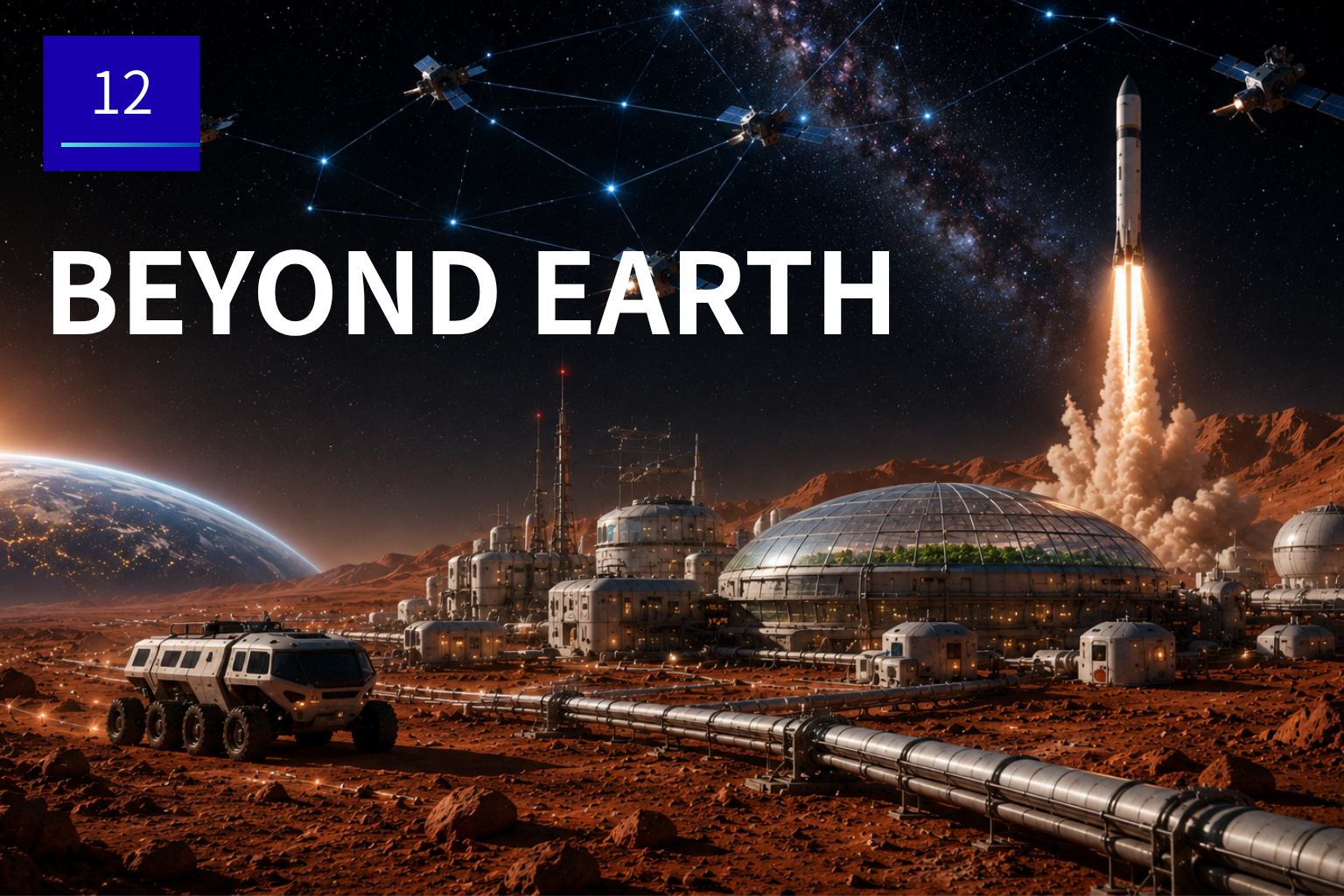
The next decade may see the emergence of entirely new industries built on orbital manufacturing, satellite networks, lunar exploration, and space-based data services. While the long-term future remains uncertain, one trend is clear: space is no longer a distant frontier reserved for astronauts and scientists.
It is becoming part of the infrastructure that powers the modern world.
For investors, entrepreneurs, and policymakers alike, understanding the space economy is becoming essential to understanding the future.
– PHAIDEA Editor’s team